Blog

7 of 14 Takeaways for the Aspiring Published Author from The Loft’s Wordsmith 2019 Conference By J. Mackenzie – Part one of a two-part blog

So much of writing is delightfully solitary. We authors eke out quiet moments in quiet corners of our busy lives where we don’t have to make eye contact with another living being so that we can stare down our own imaginative heroes and demons. We recall and create worlds. We reframe and reimagine what we know to show how things could be better. From the silence of our own minds we create battles and love affairs; we capture what it is to be human and we share it with the world in ways that can cause us all to better understand the humanity within one another and ourselves.

If the world ever reads it.

If anyone ever reads it.

Okay, can maybe my mom just read it?!?

The Loft’s Wordsmith Conference over the weekend of November 2-3, 2019 on the University of Minnesota – Twin Cities campus was built around this next step in mind, when we quiet little introspective writers need to take our gaze off our shoes and make eye contact with the world of publishing. It was built for those of us who’ve finished and polished that ‘final’* draft of a novel, look out the window above our computers screens and think ‘Now what?’ It’s for those of us who’ve spent our lives going to bookstores, zooming down the alphabet of last names to find where our own published works will eventually live. It’s for those of us who have something to say and are ready for someone to hear (read) it.

Thanks to an educational opportunities grant from the Arrowhead Regional Arts Council, I was lucky enough to venture down to the Twin Cities for the weekend conference. But I know it’s not possible for everyone to devote an entire weekend to a conference that’s 200 miles away, so, in this blog, I will attempt to bring the conference to you. The only thing you’ll miss is the cinnamon roll from Tobies on the way there. There’s simply no way to replicate that goodness.

The first part of this blog will focus on the basics of an agent/editor relationship, and how to prep your manuscript for querying. The second half, which will be published at a later date, will cover specifics of finding an agent and the publishing process.

1) Ummm…so what does an agent do?
They are your partner. Your collaborator. Your problem solver. They will get you as much money as possible for your manuscript and then will do whatever they can to get as many copies of that book sold to a greater audience.
They will take 15% of your manuscript’s purchase price (the amount your publisher pays for your manuscript). If there is a separate foreign distribution arrangement, then you’ll pay 20% (10% for your agent, 10% for the international distributor).
They’ll fight for you whenever a problem arises. Doesn’t that sound great? Book jacket design is terrible? They’ll help to figure that out. Would your book make a good movie? They’ll get it to producers. Some other unimaginable problem? They’ll deal with that too. This is why many agents only take a few new clients at a time, or maybe aren’t taking new clients at all. Because they’re fighting for other projects. They’re trying to get them sold.
Agents can be amazing. But, a word of caution, there are people who give agents a bad name. Read all contracts before signing. Ideally, have a lawyer familiar with the publishing world review any potential contracts before signing anything.

2) What does an editor do?
Edit.
And so much more.
Editors for publishing houses, of course, edit manuscripts. But they also fight for them. When an editor loves a manuscript that an agent has put in front of them, they have to sell it to a whole room full of people. They have to convince the publishing house that it’ll sell, so that their bosses will pay them to spend time on perfecting the book and eventually publish it.

Now that we’ve established the players in the game, we’ll move on to some advice on preparing your manuscript before sending it to potential agents.

3) Love Your Book. Hate Your Book. Love Your Book.
Madeline Miller, one of the keynote speakers, and author of The Song of Achilles and Circe spoke about her own editing process while finishing her manuscript. Her advice on the topic personally resonated because it perfectly summed up a process that I was experiencing without realizing it.
You have to love your book, especially when you’re writing the first draft. You have to believe in your idea and be passionate about your characters.
But then, when your draft is done, the book’s complete, your ideas are all out on the page, you have to hate your book. You have to edit. You need to believe that everything that you did could be done so much better, and then you have to do so much better.
Finally, once the editing step is done, you have to love your book again. Because if you’re not excited about it, how will anyone else be?

4) Proofread
Who would have thought that there would have had such a strong emphasis at a writer’s conference on proofreading?!?
A common question was whether agents actually throw queries away if there’s one typo.
The advice here was contradictory. Some agents have a “one typo and I’m out” policy when reviewing query letters and the first ten pages of your work (the typical amount to send alongside a query, though check each agents’ guidelines.) Others are more forgiving, knowing that a book will have to go through tons of revisions down the road anyway. (See #3).
Agents’ big concern is, and always will be, the story. However, they have a lot of other secondary concerns which can be deal breakers, and a top one is the quality of the writing. Typos in a query don’t send a strong and professional first impression. We are writers, after all.
But, bigger picture, the advice was to hold on to that manuscript until it’s DONE. Spend the time to perfect it, especially those first ten pages, which are so critical to hooking a potential agent and publisher. Rework it and revise it. Make sure it’s the best version of itself that it’s going to be. Then send it. This could take six months. This could take ten years. They don’t care. Agents will be around when you’re ready.
Agents get thousands – THOUSANDS – of queries a year. They may take ten clients on at a time. Proofread your work.
Another common question was whether us new-to-the-table authors should hire a professional editor. Agents and editors shifted uncomfortably in their chairs at this question because it’s really up to the individual author and their work. Only you know how much work is needed until a manuscript is done. Or, maybe get one, two or ten beta readers to give you feedback first for free (who owes you a favor???). If there’s a problem that you still can’t fix, maybe a professional editor could be helpful. But research them too. It would be terrible if they gave you bad advice that steered you further from your publishing goals.

5) Hold onto that manuscript until it’s ready
One of the agents on a panel commented that books need to be far more ‘done’ and polished than ever before. Back in the day, when there were dozens of publishing houses, editors could pick up projects because of their promise.
This way of life is no more.
Due to the constraints of the publishing business in 2019, he said that your book should be at least 90% of the way there, or they won’t pick it up. And, in my observation, their “90% of the way there” means that we authors have to get that manuscript as perfect as we think our book will ever be before we start the querying process.

6) The reason for the * after “‘final’*” draft in the intro paragraph to this blog
You think your draft is final, done, polished? That’s cute. The conversation that I found most surprising at the conference was the emphasis that agents and editors put on their own editing process. So, even though you need to get that manuscript as wonderful as you possibly can pre-querying, be prepared to edit it again. Over and over and over.

Depending on the agent, you can expect one to several rounds of revisions (sometimes before they even sign you!), and that’s before they even shop it out to editors and publishers. If an editor/publishing house signs with you, then you can expect one to several more rounds of editing as well (see above…it’s sort of what editors do.)

7) “Effective writing is flying” – Kao Kalia Yang
Yes, there’s a lot in this blog (just think what didn’t make the cut!). But it’s also important to continue to create the space to write. You need to take care of yourself and protect your time so that you can hit the point where you can write beautifully, eloquently and effectively. How else are you going to write that second best-seller?

Thank you to the Arrowhead Arts Regional Council for their support, and to The Loft for organizing and hosting the Wordsmith Conference.

J. Mackenzie is a passionate reader, scribbler of words, hiker, pet parent and Duluthian. She is also on the board of Lake Superior Writers, where she plans programs to connect the local writing community. She is currently seeking representation for the first time for The Platya, her third manuscript and has recently started a project, documenting the writing process from the spark of an idea through publishing. She’s currently in the early idea phase. Follow her journey at jmackenziewrites.wordpress.com.

Editing with Track Changes in Microsoft Word by Vickie Youngquist-Smith

I’m slow to warm up to technology. I’d see the Track Changes icon under the Review tab in Microsoft Word, but I’d ask myself “Do I need more technology?”

When I write a first draft, it’s rambling and long-winded. With the hardest part over, I revise and edit. I move story elements around, cut the fluff, choose the perfect word (or somewhat perfect) for precise meaning, and proofread.

My old method of revising was a cumbersome cycle: print copies, revise with a pencil, print again, revise again, save as a new document, print, revise, save, print. I used lots of paper and printer ink.

Occasionally, I’ll change my mind about revisions, so I save all the drafts of a story on my hard drive. It became overwhelming to search for a draft that contained the word, sentence, or paragraph I wanted to resurrect.

Then I took an editing class, and I had to learn about Word’s Track Changes. Using Track Changes makes revising easy—maybe too easy. In one story, I redlined part of a paragraph. A day later, I redlined the rest of the paragraph. The next day I missed it, so back it came. But a few days later, I cut it again. It’s gone for good. But, if I wanted to reinsert it, I could put my cursor on it, right click, and choose Reject Deletion.

Track Changes is easy to use. Numerous online articles and YouTube videos are available to learn about Track Changes in the many versions of Microsoft Word. I like the videos best.

Some of Track Changes useful points:

  • All edits, insertions, and deletions can be seen in one document.
  • Track Changes can be used with Comments.
  • A two-color option helps distinguish between insertions and deletions. Multiple color options are available.
  • Selecting No Markup provides an edit-free copy, which is easy to read. Select All Markup and the edits return.
  • Many editors use Track Changes.

When I want to email an edit-free copy of my work, I follow these steps:

  • I choose Save As and give my document a new name. I use the same name but add a number.
  • I click the dropdown box under the Accept icon and choose Accept All Changes and Stop Tracking. I Save
  • I still have my original copy with all the additions and deletions. But now I have a clean second copy, which I can submit to an editor.

Track Changes makes editing easier and cheaper. With a couple of clicks, I can see or hide revisions and edits. I save fewer drafts on my hard drive. And I print less, so I save money on paper and ink. For writers who use Google Docs, the feature Suggested Edits is similar to Track Changes.


Vickie Youngquist-Smith writes short stories, essays, and articles. She is working on a collection of short stories. Her short-short story “Tossed” won first place in the Lake Superior Writers’ Contest in May 2019. When she writes, her two standard poodles keep her company.

Writers’ Bumps: An Endangered Condition? by Marie Zhuikov

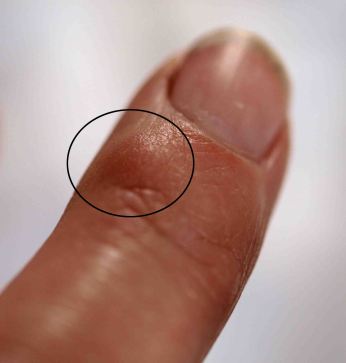
Photo by Jak of the Mast Cells & Collagen Behaving Badly blog.

OLYMPUS DIGITAL CAMERA


Writers’ Bumps: An Endangered Condition?

The picture above of the middle finger is not me flipping you off. It’s not even my finger. I found it on this blog. I am featuring it here because it shows a writer’s bump, which is something I, and many other writers have. 

These bumps are formed from the pressure of a pen or pencil pushing against the middle finger when a person is writing. If you’re right-handed, it will form on your right hand. If you’re left-handed, it will form on your left.

I once asked a manicurist if she could ever tell what profession a person has from looking at their hands. She had never considered it. Then I told her about how to spot a writer from their bump. I’m sure she was edified forever by this information and it changed how she approached her job.

I realized the other day that my writer’s bump is much smaller than it used to be, presumably because I hardly ever use a pen anymore, opting instead for a computer keyboard. This caused me some dismay since I rather like my writer’s bump and the distinction it gives my profession.

Then, I realized in horror that most young people probably don’t have a writer’s bump. They might not even know what one is since they all use phone and computer keyboards.

Truly, writers’ bumps are endangered. We just can’t stand by and let them disappear. They have been with society for hundreds of years. Somebody should do something about this. We need a public information campaign to “Save the Writers’ Bumps!” 

Where is the outrage? Why are we complacent with the disappearance of this badge of honor earned by hours of slaving over paper with a writing utensil?

Cast aside your computer keyboards and your phones my friends. Start a movement!

(Smirk. I think not. I actually love the convenience and speed of typing.)


In her day job, Marie Zhuikov is an award-winning science writer and communications project manager, specializing in environmental and medical topics. She has published hundreds of articles, publications, videos and radio programs, as well as coordinated production of many web sites. At night, Marie writes eco-mystic romance novels for new adults. Her first, Eye of the Wolf, was published in 2011. The sequel, Plover Landing, was published in 2014. Her first short story, “Water Witch,” was published in the Going Coastal anthology in 2017. Her website is http://www.mariezwrites.com and she blogs at http://mariezhuikov.wordpress.com.