
University of Minnesota – Duluth students in David Beard’s Minnesota Writers class interviewed local writers and wrote spotlight articles that we will showcase in the coming months.
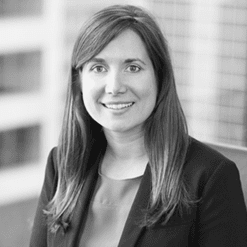
Sarah Eilefson (she/her) is a professor at UMD. She teaches a variety of writing classes, such as College Writing, Advanced Writing: Language and Literature, Advanced Writing: Arts and Letters, and Advanced Writing: Business and Organizations. Eilefson earned a Ph.D. from Loyola University Chicago in 2015 with a dissertation on great books in the 20th century that focus on wartime narratives and trauma.
According to Eilefson, most civilians have narrow views on what veterans experience when it comes to trauma. At the end of the day, she believes that we are missing the mark in all directions. When it comes to struggles in life and wartime traumas being portrayed in media, Eilefson mentions that we overstate and understate what it is like to be a veteran. Media relating to veterans and their trauma is usually represented by a soldier who’s gone rogue, been pushed too far, and, after coming back home, uses those skills in the world beyond the battlefield. That is a very rare example of some trauma veterans can face. Yet, due to this media representation, many people project this identity onto soldiers in regular life. However, in reality, most veterans never saw combat and are the backbone of society at large.
Eilefson states that whenever someone tackles a writing project, it needs to be something they care about. People drop out of programs all the time, but what kept her, drove her to keep writing her Ph.D. (298 pages!), was the fact that she was so interested in the topic and it mattered to her because of her own personal life. She has a grandfather who was a non-combat veteran, and she loved hearing from him. He was a community builder; his nickname was “Bud.” For him, he didn’t have any traumatic experiences, just the fact that boot camp in itself is very hard on the body and on the mind.
After doing a small project in high school on veterans being represented in the TV series The X-Files, this idea of writing something bigger took root in college. She was captivated by veterans and the stories we tell about traumatic experience. Her senior thesis in college was about The Things They Carried (by Tim O’Brien). She obtained a grant and was able to travel to Vietnam for 3 weeks. There, she really got to explore more of what she had been hearing about in the media and what she saw and read. She mentions an O’Brien article, “The Vietnam in Me” about when he revisited Vietnam decades after the war. Eilefson took all these inspirations from different angles and wanted to write more.
After being admitted to a master’s degree program, she took a class called “Men, Masculinity, and War Stories,” and realized this is where she wanted to spend more time. The teacher of this class, Allen Frantzen, ended up being her dissertation director. Frantzen helped Eilefson tremendously in her perspective on military service, gender studies, and masculinity.
For the first part of Eilefson’s doctoral study, she worked at the National Veterans Art Museum. She gathered a lot from that experience working there. But after a certain point, nearing the end of writing her dissertation, she realized that she could not balance the timing of everything; she was doing too much. She quit that job and focused more on finishing the writing. Balancing the intense amount of work for writing a Ph.D. with everything else in life was challenging, though rewarding.
Eilefson took graduate-level coursework for 3 years and took a year to prepare for her qualifying exams. Then, for the last year, it was all about the writing, for however long that would take. Her writing process at first was a struggle because she wanted to get “the right draft.” However, during that process, she heard valuable advice from Frantzen. He told her that she needed to be more willing to tear apart what she had already written if she wasn’t really getting it. Overall, though, the writing process of the dissertation was tough, but she got through it because she had the determination, plus the interest in the topic drove her to finish it. She had ties to her grandfather that helped her write more.
When it comes to a project that is less tethered to your personal life, you should think about what impact, what change, you can make with what you are doing. For example, what can someone else do with the information that I am writing or talking about?
Eilefson had advice. She mentions a short text by Virginia Woolf, A Room of One’s Own, which suggests that, if you are going to be a writer, you need to have enough support, you need to have a roof over your head, you need to have food, you need to have time, and you need to have a quiet space. She agrees with Woolf and hopes we work toward a world where all scholars and writers have these resources and support.
I had one last question to ask Eilefson: if she had one more piece of advice for newer writers, if there was something that those newer writers were overlooking. Her advice was to go write. Simple. If you are unsure about writing something, go ahead and write it. Starting is hard, but Eilefson maintains that a lot of people bottle up a lot of good ideas, a lot of emotions, a lot of experiences, because they think they don’t have an audience, because they think they don’t have the skills to do justice to it. How will you know unless you try? How will you know what you think unless you say it? These are all great things to think about if you are a newer writer.
Solomon Lubka is a writer of whatever he finds interesting, which could be anything. He is the youngest child and admittedly the most unambitious, coming from Minneapolis, Minnesota. He has always had a passion for writing since it came more easily to him as a student. Solomon likes to write in environments where he feels comfortable, like in a quiet library or a homey atmosphere. Overall, Solomon is an easygoing person who tries to be lazy at every turn, but will focus and try his hardest when he needs to. He prefers to hang out with friends and play games in his free time.

