
University of Minnesota – Duluth students in David Beard’s Minnesota Writers class interviewed local writers and wrote spotlight articles that we will showcase in the coming months.
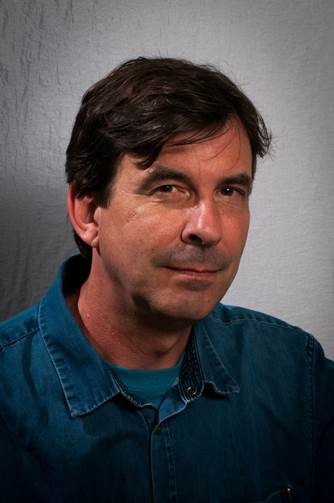
What does it mean to write about your own experiences, and to share them with the world? This has been a burning question of mine recently, and Professor Carter Meland, a member of the American Indian Studies faculty at the University of Minnesota, Duluth, offers some valuable insight into the process of writing one’s own story.
Meland has published numerous works steeped in personal experience, some of which are what would be considered creative nonfiction. He chooses to write in this genre because he is able to use techniques from fiction in a nonfiction setting. For him, writing is not simply about delivering information, but instead about “igniting something or catalyzing something, and the trick… is to really open up the story.” Utilizing these different techniques helps Meland build out context within his stories, where his experience can take on different kinds of meaning.
Meland asks himself, “What’s gonna make… [people] sit up and take notice?”
In Meland’s work, he often explores themes of identity. But for him, it’s not so much about what that identity means, but rather what it means to not know a part of yourself. In his essay, “Thinking With Bigfoot about a Jackpine Savage: Cryptogeneological Reflections,” Meland writes about his family’s discovery of their Anishinaabe heritage, sparking a long journey into his connections with his past as well as discovering new connections in his present. When I asked about how his writing has helped him explore these questions further, he responded that it has often come up in his teaching. He says, “as a Native Studies professor… I feel like Native Studies has two directions: one is to reinforce and revitalize, and reclaim indigenous knowledge for indigenous communities, but then also… let’s communicate that outwards too.” Meland believes that exploring his experience, and the question of “not knowing,” is a part of the process of reshaping the current narrative of settler-Native relations.
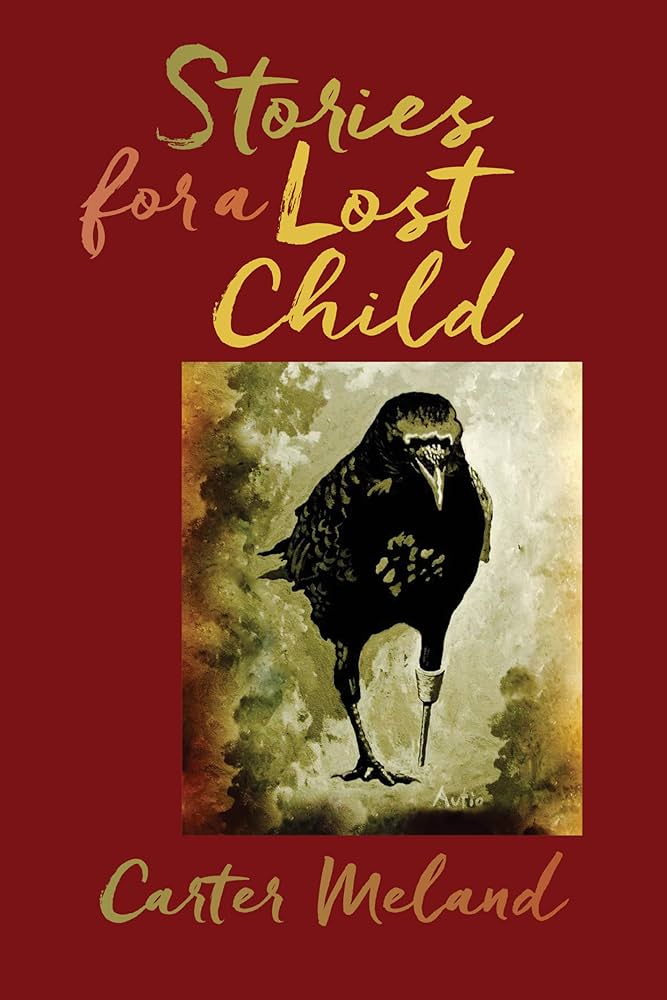
Learning about and exploring his new identity has also influenced the way Meland perceives his past. One of the strongest influences in “Thinking With Bigfoot,” is, of course, the creature Bigfoot, or Bagwajinini. Within his essay, Meland describes how he first encountered the creature in the library, on a spinning wire rack. The memory became a core one. “[If] you know the X-files… Fox Mulder, you know he’s got his poster “I Want to Believe… The moment I heard about Bigfoot, I wanted to believe.” The idea of an elusive creature, of striving to know that creature, was thrilling. Over time, however, Meland has learned to see the beauty in not knowing. “I prefer to think of it as a real presence in the world,” emphasizing the connection and overlap of the spiritual and material and deepening his own connection to both.
It can be difficult for a writer to open up in their work as much as Meland does. His belief is that it’s not really that personal. Instead, he feels as though his experiences are reflective of a larger whole. “I feel like my experience as somebody who did not know about our Native heritage… is a layered story that to me… [is] kind of like compacting how we sort of erase the Native presence in American culture and history.” Yet, with that feeling of place, comes a feeling of humility as well. “I have to have the confidence in something to share it, but at the same time I want to be humble, and not make myself out to be some sort of hero.”
As for other young authors looking to further explore their own stories, Meland offers this advice: “What I say to them, and what I’ll say to you… I think what you should do in writing about your own experience is… just start writing… don’t think of it as part of a bigger thing. You don’t need to connect them.” Rather than focusing on form and attempting to determine your story before it’s written, write down memories, anecdotes, and other pieces that stand out to you. In doing so, you may be able to step away and see a larger pattern emerge, like putting the pieces of a jigsaw puzzle in place.
As someone who has only recently joined the field of writing myself, this advice turns the intimidating notion of writing my experiences into something with manageable pieces and opens it up to exploration. It’s comforting to leave the label for the end, instead of trying to fit the narrative into a specific shape. Perhaps, similarly to Meland’s experience, it will become easier to share and understand the significance of these experiences over time.
Whether you are new to the field like I am, or simply at a loss for where to start your story, perhaps these words of wisdom will give you a place to begin. Though the puzzle pieces may not seem to fit now, they may simply be waiting to fall into their proper place.
Theresa Beck received her degree in Public History, Museum Studies, and Digital Writing, Literature & Design from the University of Minnesota, Duluth. She has published an article in the Lake Superior Railroad Museum’s quarterly magazine, “The Junction,” as well as authored multiple articles for the museum’s blog. For her, writing is an opportunity to bring history to the public and engage them in an opportunity to ask their own questions. She has a passion for learning new things, whether that be exploring a niche piece of history or using her free time to master a new type of arts and crafts.
 Lake Superior Writers