
University of Minnesota – Duluth students in David Beard’s Minnesota Writers class interviewed local writers and wrote spotlight articles that we will showcase in the coming months.
When I reached out to Alex Messenger for an interview, I expected a story about wilderness and survival. What I found was something deeper, a story about revisiting pain, shaping memory, and the quiet courage it takes to put a life-altering event into words. Messenger’s book, The Twenty-Ninth Day, recounts his near-fatal encounter with a grizzly bear at age seventeen during a canoe trip in the Canadian wilderness. It’s a gripping narrative of survival, but it’s also a meditation on healing and the act of writing itself.
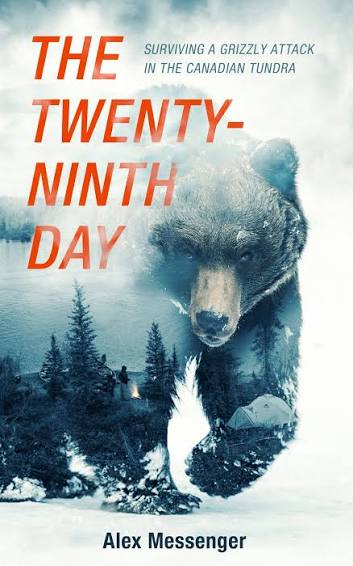
When I asked Messenger what made him feel ready to revisit the attack, his honesty was disarming. “I didn’t feel ready,” he wrote. “I was ready to revisit the experience of the trip, and I knew that doing so would be important to me for processing and might be to others as well. I put off revisiting the attack itself though until I had to, at the very end when everything else with the project was done.”
That admission captures the paradox of recovery: sometimes understanding doesn’t precede the work; it follows from it. Messenger described how writing forced him to re-enter the most terrifying moment of his life, and in doing so, offered clarity he couldn’t find any other way. “I thought I had to understand it before I could revisit it,” he said, “but what I learned was that I had to revisit the experience in order to better understand it.” For him, readiness wasn’t a feeling that came first, it was something built word by word.

Editing that story into its final form proved to be another challenge. Messenger confessed that his first draft was a behemoth: “My first draft included everything I had written in my journal and everything I could remember as I transcribed it. I ended up with a colossal 200,000-word tome, filled with a bunch of noise alongside the kernels of what would become the book.” The process of cutting and refining was a collaborative one, involving editors and early readers who helped him see what was essential. “I wanted to have the finished piece become an experience that the reader could have,” he explained, “for them to come along with me.” That goal, making the reader not just an observer but a participant, guided every editorial decision.
Messenger spoke about resilience, a theme that courses through The Twenty-Ninth Day not just as physical endurance but as emotional recovery. Writing became, for him, both a form of therapy and a tool for order. “Writing the book was an important step for me in both understanding what had happened, and being able to categorize it and place it in my mind,” he wrote. Trauma, he reflected, challenges our brains precisely because it breaks the patterns of normal experience. “That intentional process of revisiting and thinking through things gave my mind a safe space to explore this experience. And when I was done, I felt like I’d gone down that path as far as I needed to, and could now—quite literally—put this experience on the shelf.”
What struck me most in his responses was how his hard-earned patience translated into advice for other writers. The years he spent crafting The Twenty-Ninth Day shaped how he approaches all creative work. “At the core,” he said, “is the idea that we can achieve ambitious goals through steady work, even in small amounts. I worked on the book for years, with a rough plan and goal… Sometimes I would ask myself: Okay, what next? What can I work on now that will allow me to make at least some progress?” His insight feels almost like a mantra for anyone facing a daunting project: momentum matters more than magnitude.
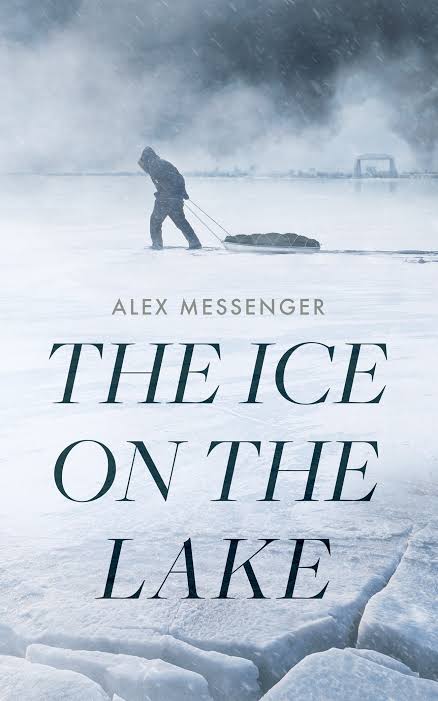
We also discussed the thin and shifting line between storytelling and truth. “Memory and emotion are challenging, fallible, and yet also true, they are the experiences that we take with us,” Messenger wrote. When dealing with nonfiction, he grounds those emotions in evidence: “I interviewed others, found documents as I was able, reviewed my journal and my photographs.” If memory faltered, he treated it transparently. “If you’re writing nonfiction you have to stick to the facts, and present anything fuzzy as such.” His discipline in separating recollection from verification gives The Twenty-Ninth Day its credibility. But Messenger also finds release in fiction, which he’s turning to in his forthcoming novel The Ice on the Lake. “With nonfiction, you’re working with some well-defined bumpers,” he said. “When you’re starting from scratch, you have to figure it all out. Beginning The Ice on the Lake was really hard because I didn’t know where to start.” His solution? Lower the bar. “I started writing the book on the back of my daily calendar in short 15-minute breaks at work… That gave me permission to not worry about the quality, just focus on the small steps.”
I asked what advice he would give to writers who want to tell their own survival or personal stories but fear reliving them. “The best advice is just to start,” he wrote. “A big lesson for me was embracing a terrible first draft as progress.” He urged writers to resist self-censorship during the drafting stage: “It’s easy to stop yourself because you don’t think people will like it… but you can choose later whether you use something or you don’t.”
Reading through Messenger’s responses, I was reminded that storytelling, at its core, is an act of endurance. In The Twenty-Ninth Day, that endurance takes the shape of survival against nature; in his writing life, it means persistence through doubt, draft after draft. What began as a terrifying encounter in the wilderness evolved into something larger: a story about how language itself can be a shelter, a compass, a way home.
In revisiting his darkest moment, Alex Messenger didn’t just chronicle a brush with death; he demonstrated how storytelling can bring us back to life.
Alex Messenger is an author, photographer, and communication professional based in Duluth, Minnesota. At seventeen, he was mauled by a grizzly bear while on a canoe trip in the Canadian tundra—an experience that became the foundation of his bestselling memoir, The Twenty-Ninth Day (Blackstone, 2019). His second book and debut fiction novel, The Ice on the Lake, was released on March 10, 2026 from Blackstone Publishing.
Remi Foust is a passionate reader of young adult fiction, particularly interested in how book banning affects adolescent education. She is currently studying English, writing, and sustainability, with plans to pursue a graduate degree in library science and English. Remi can often be found at the Kathryn A. Martin Library working as a research peer mentor or at Duluth’s cat cafe, where she doubles as barista and cat caretaker. She has been honored with the English Program Reed Scholarship and the Joseph E. Duncan Scholarship. In her free time, Remi enjoys reading, crocheting, and creatively procrastinating by starting new projects.

