
University of Minnesota – Duluth students in David Beard’s Minnesota Writers class interviewed local writers and wrote spotlight articles that we will showcase in the coming months.
June 15th, 1920. A night that should have lived in infamy and instead was all but forgotten. Three young black men–Elias Clayton, Elmer Jackson, and Isaac McGhie–were forcibly removed from a jail cell and lynched in the street for all to see. In what is known as the only instance of lynching of African-Americans in Minnesota, three men were brutally attacked and murdered by an angry mob made up of a large number of enraged white Duluthians. When Duluth native, Michael Fedo, started the research for a novel he was beginning to write, he remembered a story his mother had told him about the lynchings in Duluth. When he went to look for the records of this event he found that there were no stories or written records of the terrible lynchings that had occurred. This was when he decided there was a story that needed to be told. I recently had the opportunity to sit down with Fedo and hear more about this story.
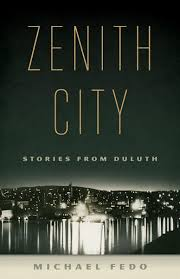

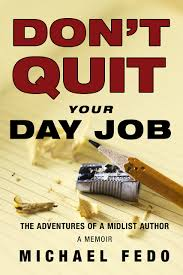
Micheal Fedo, native to the Duluth area, is a prolific author. His collection of works includes over 50 published short stories and 10 books. Arguably one of his most well-known works is The Lynchings in Duluth. Told in an hour-by-hour narrative style, readers walk through the events from the perspectives of those who lived through them, from rioters and police officers to what the actual prisoners themselves could have been thinking. There were six men arrested in total, all of them working at the circus that had been in town on the night of the 14th. This circus is where the alleged rape of Irene Tusken and the assault of James Sullivan occurred by what they claimed were six Black employees. The assault was reported hours later by Sullivan when he showed up to work later that night and from there the police were notified and thirteen Balck circus employees were apprehended. Originally published under a different name, Fedo’s story is an all-encompassing resource for the terrible lynchings.
The Lynchings in Duluth is an eye-opening look at the racial discrimination and historical act of hate in 1920. When he started what was to become The Lynchings in Duluth, Fedo said he was writing for an audience of “anyone in Minnesota who read.” He was shocked that nobody remembered the lynchings, well, nobody white remembered. The libraries didn’t have resources on it, it wasn’t being taught in classes, even classes about Minnesota.
Fedo was warned that he might get threats and there were some people who were upset by the publishing of the events. One man was so upset he sent horribly racist letters to Fedo. Many people, specifically white people, were upset that what they considered to be an extraneous part of Duluth’s past was being dredged up again. Even through this controversy, and the specific controversy attributed to its original title, Fedo talked about how people found and appreciated this book. Most people he talked to, and especially the Black Duluthians he talked to, were eager and thankful someone was finally recording the story.
When asked about the writing of his story, Fedo had an interesting perspective. Fedo’s work is able to tell a diverse story, one that explores the differing perspectives of rioters, bystanders, relatives, and members of the police who were there that night. Fedo’s research allowed him to explore the demographics of Duluth and how racial tension played a big role in the lynching of three young black men. He discussed how in the beginning, he “was really just trying to get ahold of anybody who would be willing to talk about it.” It was important to him to get accounts from people who would have had knowledge about what happened. Some people were easier to talk with than others. One man, in particular, had heard that Fedo was interviewing people about what happened and got ahold of him to tell his story. Unfortunately, the man’s story ended up being fabricated as he was never truly there that night. Fedo’s decision not to include the fabricated account hinged on his commitment to an ethical and honest recording of events. He went on to say that “some people have called this creative nonfiction” but he “didn’t include footnotes because [he] didn’t write this book for an academic readership.” Instead, the story is told from numerous perspectives that allow the reader to get into the minds of those there and see the way some of these men rationalized their actions.
The story is also told in the present tense, readers walk through the events hour by hour. Fedo admits he hadn’t really been thinking about the storytelling structure when he started writing but “what’s in [his] head as [he] works is story and what makes a story work.” He thought that this approach, the hour-by-hour structuring of events, would be engaging and more real to the audience, “cast a historical event to sound like the present, the story is more vivid to your readers.” Fedo’s work was the first to detail the events that transpired in June of 1920. He was the first to fully document what happened and put these men back into history.
Fedo never set out to write what became The Lynchings in Duluth. The book was originally published in 1979 and remains in print with the Minnesota Historical Press decades later. To this day there are not many sources about the lynchings. In 2003 the city of Duluth erected a memorial across from where the three men were lynched to keep the memory of what happened alive and commemorate the lives of Clayton, Jackson, and McGhie. Fedo’s work tells the story of an important piece of Minnesota history. Even though it is a difficult history for some to acknowledge, the murder of these three young men should not be forgotten.
Piper Wetzel is a college student born and raised in Minnesota. She attends the University of Minnesota Duluth and is majoring in English, Public History, and Writing Studies with certificates in Museum Studies and Creative Writing. She has also won scholarships for her essays over the years. She has an interest in writing about the representation of women in literature, feminist and queer theory, and analyzing novels. When writing creatively she prefers to write fiction but never seems to accomplish more than a few hundred words before she gives up on an idea. She grew up in a middle-class family in a small town in central Minnesota before moving to Duluth for college. Some of her favorite books include Frankenstein, Pride and Prejudice, and Gone Girl (read into that what you will). She hopes to one day make it in publishing and is considering pursuing a joint JD and MA in English before breaking into the industry, or moving to late 1800s London and becoming a street urchin.
 Lake Superior Writers