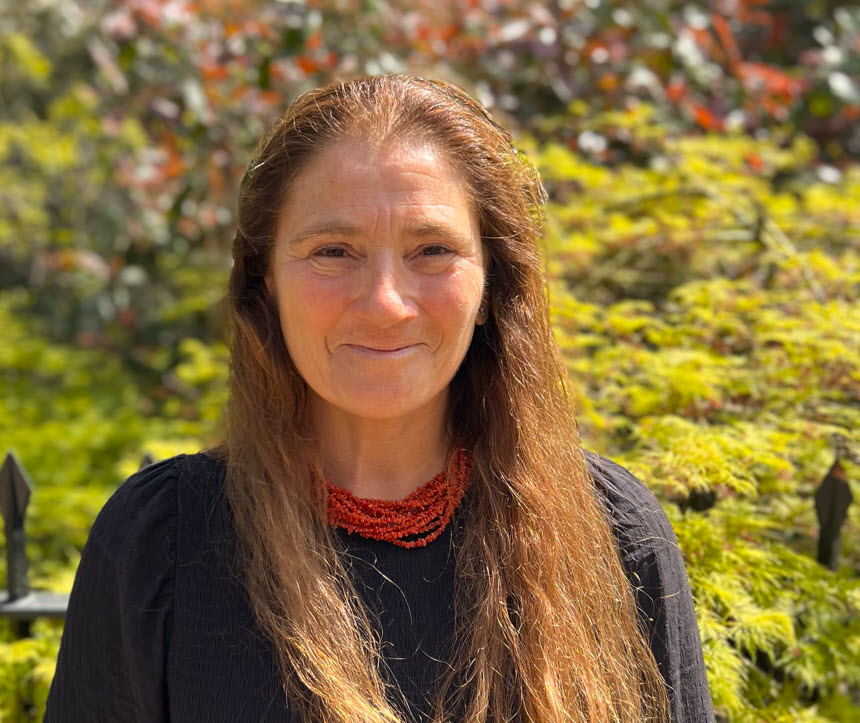
Minnesota Writers Spotlight on Emily Gaarder by Phoebe Diez

University of Minnesota – Duluth students in David Beard’s Minnesota Writers class interviewed local writers and wrote spotlight articles that we will showcase in the coming months. 


Upon entering Professor Emily Gaarder’s office, my eyes were immediately drawn to her shirt, which proudly displayed the word “feminist.” I couldn’t help but smile and comment on it, sparking an instant connection. As a double major in Writing Studies and Women, Gender, and Sexuality Studies, I’m committed to feminist causes and animal activism– two areas where Professor Gaarder has left a significant mark. This conversation was more than an interview; it was a chance to learn from someone who had merged advocacy with academic work and creative expression in ways that I hope to emulate.

Professor Gaarder, a feminist, animal rights activist, writer, and musician, has made waves in both academic, activist, and musical communities across Minnesota. As we settled in, I quickly realized that this conversation would be a powerful learning experience for any young writer passionate about social justice. Gaarder’s career demonstrates how one can seamlessly merge creative expression with advocacy, inspiring others along the way.

Gaarder shared how her early passion for both animal rights and feminist issues grew into a lifelong commitment, rooted in both academic study and hands-on activism. “Our everyday practices of activism are important and help us stay grounded. Activism, just like in this time and age…can feel overwhelming. Everywhere we turn. So, we have to work with people,” she explained. She described how her career has been a balancing act between teaching, parenting, writing, singing, and dedicating herself to causes she cares deeply about.

She also shared a pivotal moment in her life when her understanding of music’s power to convey ideas expanded. “Sarah Thompson, who is a local singer, songwriter, and musician I really love and have learned from, she would sometimes come to my classes and talk about how you could be teaching or sharing about an idea.” Sarah’s approach to art opened Gaarder’s eyes to the unique way music can impact people. She recalled how Sarah would use music and art to help students better understand the immigrant experience, explaining that “music and art come into the brain in a different way.” Gaarder found this perspective valuable because it suggested that, at times, music can communicate emotions and ideas in ways that are more accessible, engaging the heart rather than just the mind.

When I commented on how some people prefer writing over music, or vice-versa, as a form of self-expression, Gaarder agreed, noting that different people resonate with different forms of art. She continued, “I have writers and poets I read who, you know, I don’t need it to be musical, it just kinda sings on the page. I don’t really know how to do that. I can do it with the music but I don’t think I could do it the other way.” For Gaarder, the beauty of creative expression lies in how each person finds their own unique method of communication—whether through words, music, or both. Her ability to move between different forms of expression, while acknowledging their distinct qualities, highlights her deep understanding of how art can serve as a powerful tool for advocacy and connection.

When I asked Professor Gaarder which musician she would collaborate with, she eagerly jumped into the conversation, naming several artists who have influenced her over the years. ‘Waxahatchee’ was the first to come to mind, inspiring Gaarder because of her boldness and risk-taking in music. She then reflected on her college years, where artists like the Indigo Girls and Ani DiFranco had a profound impact on her. “They made me think, ‘Oh my God, I don’t play the guitar,’” Gaarder confessed, sharing how their socially conscious and feminist lyrics motivated her to pick up the guitar. At the time, certain topics or issues were viewed as taboo to discuss publicly, but these artists openly embraced progressive values and queer identities, showing Gaarder that it was possible to merge activism with music in a way that felt authentic.

When I asked Professor Gaarder about the challenges of balancing the personal and professional aspects of writing, particularly when working on topics close to her beliefs, she offered a thoughtful response. Rather than simply answering, she turned the question back on me, asking me to choose which aspect I found most interesting. I opted for her perspective as a writer, and she shared some insights that highlighted the tension between personal conviction and professional responsibility. Gaarder explained that when writing about her own research, she’s always aware of the need for reflexivity. “There’s no such thing as neutrality,” she said, acknowledging the importance of recognizing her perspective while engaging with the data. She emphasized that a writer must be open to standing by their research or theory, even if it challenges others. “If you’re a people pleaser,” she added, “you have to work on that.” Writing, especially about topics she deeply cares about, requires her to embrace criticism and stand firm in her views, knowing that some will disagree.

The same challenge extends to her music. Gaarder reflected on the process of writing and performing a song, where listeners might interpret her lyrics differently than she intended. “Some people are gonna connect to it because they actually think it’s something that I don’t think it’s about, but that’s okay,” she said. This acknowledgment of varied interpretations led her to consider the importance of staying true to her creative intent while being open to the feedback and reactions of others.

During our conversation, I asked Professor Gaarder how her creative process in music-making with the band The Rhizomes compares to the process of writing a book. Her response reflected both the similarities and differences between the two forms of creative expression. “You still have to put in the work,” she said. “Just because for me it’s more flowy, it’s more fun, but also it’s still hard.” For Gaarder, the creative process, whether for music or writing, requires consistent effort. One of the biggest challenges, she explained, is finding the time to commit to creativity when life demands so much attention.

When I asked if she finds parallels in how she approaches each creative process, Gaarder responded thoughtfully. She acknowledged that while she approaches music and writing differently, the underlying themes of accountability and social support are present in both. She is part of a writing group with other women faculty, where the members hold each other accountable to show up for their work. “There’s something about the social support of that that makes a difference,” Gaarder noted. The social aspect of creative work, whether in writing or music, helps combat the isolation often associated with the process. Gaarder expressed the importance of having a space where creators can give and receive feedback, which is just as crucial for musicians as it is for writers.

She also shared advice from a songwriter, Stephen Kellogg, who said, “Just say it straight, then say it great.” This advice, which applies to both academic writing and songwriting, encourages writers and musicians not to get bogged down by perfectionism in the initial stages. “We can overcorrect ourselves,” Gaarder reflected, “‘That’s not good enough,’ or ‘That’s too cliche.’ You’ll remember the emotion, the idea, or the concept. You can say it great, later.” This approach to writing resonated with me, as I often struggle with the expectation that my first draft must be flawless. Gaarder offered a reassuring perspective, sharing how her friend, an academic writer, drafts and revises her work multiple times before it reaches its final form. “Perfectionism is the enemy of creativity,” Gaarder said. Her words made me realize that the creative process isn’t about getting everything perfect right away– It’s about giving yourself the freedom to revise and grow along the way.


Phoebe Diez is a double major in Writing Studies and Women, Gender, and Sexuality Studies at the University of Minnesota, Duluth. She has a passion for exploring feminist topics, including women’s rights, violence against women, and reproductive health, in her written work. She also writes personal stories that touch on themes of childhood nostalgia, mental health, and personal growth. A creative writer at heart, Phoebe has earned recognition in writing contests, winning 1st and 3rd place in creative writing competitions. Outside of writing, she enjoys playing video games, like Dead by Daylight and The Sims, and spending time with her twin sister and friends watching horror movies and scary video game playthroughs. Phoebe currently works at Canal Bark, a doggy daycare and overnight boarding facility, where she cares for dogs, puppies, kittens, and cats. She dreams of becoming a published author or editor.

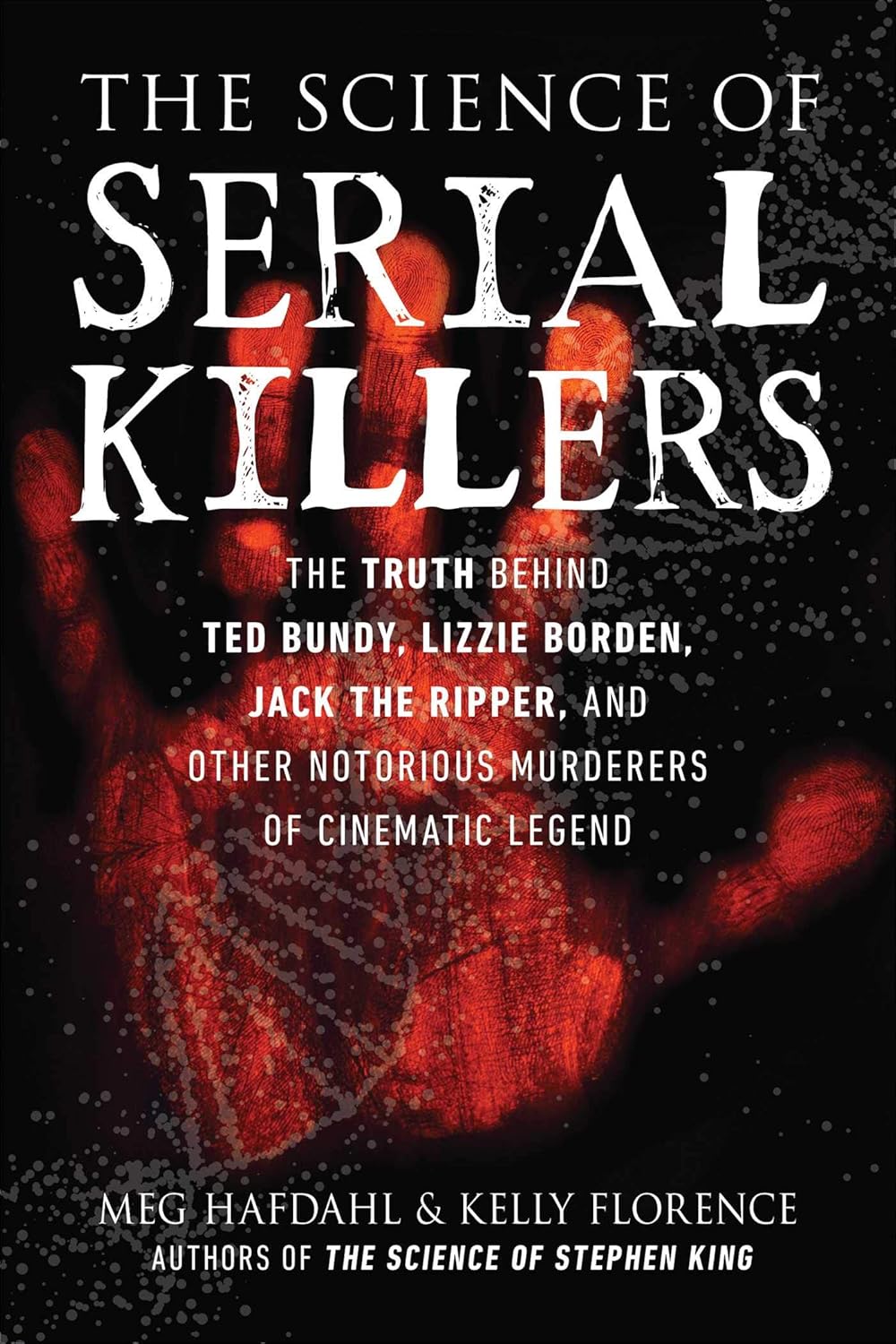
Minnesota Writers Spotlight on Kelly Florence by Rachel Carroll

University of Minnesota – Duluth students in David Beard’s Minnesota Writers class interviewed local writers and wrote spotlight articles that we will showcase in the coming months. 


The horror genre has been ingrained in human culture for centuries and our fascination with it has only intensified with time. However, over the past several decades, horror has transitioned from books to the world of cinema. Late in the fall of 2024, I spoke with Kelly Florence, cohost of the Horror Rewind podcast and coauthor of The Science of Monsters about her experience as a nonfiction author and her fascination with the horror genre.

Florence, with a background in both theatre and communication, found an outlet in her podcast, Horror Rewind, which explores the elements of different forms of horror media in a “fun, female-driven way.” While Florence’s podcast features hundreds of film-focused episodes, her book only delves into the science behind thirty films.

“It’s always a struggle to narrow down which films to write about, but, when research begins, it becomes more apparent which threads to follow and which to leave behind. Sometimes, we’re excited to write about a particular movie, but we discover the themes have been covered in a previous book or chapter of ours. So, we pivot to make things fresh and new.”

Much like her podcast, her book is a collaborative project with Meg Hafdahl, her long-time friend and also a fellow Minnesotan. The two met in a gift shop and have been friends ever since. While they both share a love of horror, creating a project divided equally between two can be a challenge. 

Despite the potential complications, the women are determined to create together.

“When we wrote our first book, we worked on every chapter together. We each did research and then discussed which avenues felt the most exciting to pursue. If we both weren’t passionate about something, we’d either exclude the topic or have the person who was interested take the lead.”

Florence seamlessly connects the scientific and fictional aspects of the horror genre throughout the book. In the book, she provides information about a multitude of different monsters and horrific events, such as vampires, witches, and even diseases that correlate with the films.

In a few cases, there is no simple scientific explanation. Florence also implemented myths and rumors to fill in the gaps left by science.

“Since lore and legends have been handed down through generations, it’s important to note how prevalent they are across the world. It’s been fascinating to discover how many stories and tropes are similar across cultures even though there’s no way people could have been sharing them continents apart.”

Despite the lack of scientific backing behind these myths, they have been just as important to the horror genre, which Florence discovered through her research. The presence of supernatural elements, which is extremely common in cultural legends, is often portrayed in these horror films.

One of the main issues nonfiction authors face is reader engagement. Florence found that a unique and easy-to-read format was the key to keeping the audience interested in her book.

“By dividing the book into sections, we can easily hone in on themes that will keep the reader interested while exploring a spectrum of topics. While this format worked for the film analysis books, we found that chronologically ordered chapters made more sense for the biography books we wrote like The Science of Stephen King (2020).”

Florence and Hafdahl divided their book into ten main sections, each containing 3 subsections focusing on a popular film within that section. Not only does this allow Florence to delve deeper into the scientific explanation behind each topic, it keeps the reader entertained. Through this engaging formatting, Florence was able to fight the stereotype of a “boring non-fiction book” and keep readers interested.

Since Florence wanted to concentrate on the reality behind the world’s favorite horror films, she had to write about a variety of extremely sensitive subjects. In the book’s chapter on Halloween, Florence writes about children who have become murderers which most likely inspired the creation of the infamous character of Michael Myers.

“It’s important to us in our books to write well-researched truths that relate to and [have] inspired the horror genre. Including sensitive topics and true crimes in chapters are handled delicately so as not to sensationalize the events. We also strive to be victim and survivor-focused so that criminals are not centered or put on a pedestal,” she said.

Florence is dedicated to handling the stories of violent crime with care. When discussing a real serial killer in the book, she presents only the facts and directly connects the event to the cinematic equivalent. This accomplishes her goal of education without idolizing the killers.

Studios continue to produce horror films and audiences around the world continue to be captivated by witnessing their fears portrayed on the big screen. Pop culture, as Florence has noticed, tends to revolve around specific niches in the horror genre.

“There are so many movies that have come out in the past five years that we would love to have included in The Science of Monsters. A major recent theme has been religion and cults so movies like Heretic (2024), Immaculate (2024), and Longlegs (2024) would be a fascinating section to delve into.”

Florence’s upcoming book, The Science of Alfred Hitchcock, is expected to be published in August of 2025 and is also in collaboration with Hafdahl. Following her pattern of a scientific analysis of famous horror films, this book focuses on the biographical and scientific aspects of Hitchcock’s most iconic works.

“Because the number of horror films we could write about was vast, there is plenty of content we will continue to write about in the future.”

Society, much like Florence herself, is forever fascinated with horror media. Just last year, horror was one of the most inspired and lucrative genres in cinema, producing hit films such as A Quiet Place: Day One and The Substance. Just as viewers continue to be captivated, Florence continues to investigate the scientific evidence behind these stories. While I consider myself to be a more surface-level horror fan, my experience with Florence’s writing has simultaneously educated me and amplified my interest in the genre.

Rachel Carroll is a student attending the University of Minnesota Duluth, pursuing a double major in Accounting and English. She has received multiple scholarships due to her academic success. Ever since she was a child, Rachel has been passionate about books and reading in all forms. Her taste in books varies, but she generally enjoys the genres of realistic fiction and romance. In her free time, Rachel enjoys reading (obviously!), going on walks in nature, spending time with her friends/family, and daydreaming about living in New York City. One of Rachel’s life goals is to have a home library that includes every single book in the Penguin Clothbound Classics collection.

Minnesota Writers Spotlight on Amy Jo Swing by Joseph Bruce Bussey, Jr

University of Minnesota – Duluth students in David Beard’s Minnesota Writers class interviewed local writers and wrote spotlight articles that we will showcase in the coming months. First up is poet, instructor, and Lake Superior Writers Board Member, Amy Jo Swing.


Amy Jo Swing, an instructor at Lake Superior College, sat down with me in the Equity and Diversity Center to talk about her poetry featuring Coloring of Monsters, Crossing it Off, and Wordage. What started as an interview turned into a deep and thoughtful conversation diving into the motivations and inspirations of Amy Jo Swing’s work and her upbringing – along with her wisdom and philosophy. I asked her, “In Coloring the Monsters, you focus on emotions and color theory, speaking of love, anger, and the complexity of it all. What compelled you to write this piece?” 

“I’ve always been an admirer of art. If you ever go to the Rothko Chapel in Texas (I went to college down there), you’ll find pieces of art that are full of color. I wanted to mix my passion with what I admire, because that’s all art really is.” 

The Rothko Chapel (in Houston, Texas), sits as a major work of modern art. Inside, beautiful pieces reign and dominate the walls. Fourteen of Mark Rothko’s paintings are there.  The more and more we conversed, the more and more I realized that if Amy Jo Swing hadn’t become an English teacher, she’d surely become a teacher of art. I then asked her about the second poem, Crossing it Off. Or well, tried to. I was flustered in trying to get my words out of my mouth. “In Crossing it Off, you write about a list that packs a punch out of nowhere. Why’d you construct it like that?” A basic question, I was so embarrassed. But I was surprised by Amy’s laugh. 

“I wanted to emulate a type of poem where the beginning and end are similar. It’s called a pantoum. At the time, a lot was going on in my life. (I think I was just out of graduate school? I don’t recall completely.) But I wanted to mix in the anxiety of being a woman with the day-to-day shopping list.” 

In the poem, Amy Jo Swing sneaks reality into the idea of a shopping list – a metafictional take; a play within a play. The play, of course, is the realistic shopping list that you and I use daily, but Amy Jo Swing adds in a dabble of reality, which does indeed pack a punch when reading it for the first time. The subtle move alludes to the high expectations that society has on women.

Finally, I asked a question concerning Wordage. In the poem, she talks about how she was bullied a lot for not saying words correctly. So I asked, “In Wordage, you talk about how diction and enunciation were of the utmost importance. What would younger-you think if she were to meet present-you and the career you’re in?” This made her genuinely laugh. 

“She’d probably think, ‘What on Earth are you doing?’  It’s a bit ironic, I suppose. But at the same time, words have always been important to me.” 

Amy Jo Swing’s parents were blue-collar workers and instilled in Amy Jo Swing the importance of education and learning. 

I then asked her questions about her process and how she got published. 

“Well, I was lucky. I was part of a poetry group at a young age in Alaska, where they treated me like poet, not some kid who liked to write. I never published work myself (I have tried to, but never was able) but I was part of anthologies. Actually, I brought a copy of an anthology I was a part of. Take a look at the names.” 

I did. On the minimalist white cover were half a dozen names. I recognized one of them, that being William Krueger, another Minnesotan author. She told me to read the names again, and I did, only to find that she worked with Kate DiCamillo. My favorite childhood author. Amy Jo Swing got to publish poetry alongside Kate DiCamillo. I was floored. 

“Okay, now I don’t mean to ask this basic question-” 

“I don’t have to answer it,” Amy Jo Swing replied with humor. 

“True. But what is your writing process?” 

She thought for a moment. 

“I’m a collector. I rarely ever sit down and actually write, I like to experience things and if something comes to mind, I’ll write it down. Then, I take what I’ve written down and make something out of it. Poetry is something that comes from the heart. My thesis advisor in graduate school once told me, ‘Writing poetry won’t save your life, but reading it would.’” 

Saving a life – taking what we do not know or what hinders us or what angers and saddens us and trying to make sense of it. As Kait Rokowski wrote, “Nothing ever ends poetically. It ends and we turn it into poetry. All that blood was never once beautiful. It was just red.”  Amy Jo Swing is a local treasure, taking the chaos around us that is called life and making sense of it. She embodies Walt Whitman’s quote: “We do not read and write poetry because it is cute, we read and write poetry because we are members of the human race. And the human race is filled with passion.” She is a captain charting her own course, cutting her own sails, and unabashedly riding the waves. 

Joseph Bruce Bussey, Jr. is working on his English degree at the University of Minnesota-Duluth. He’s best known for his poetry and essays, receiving praise from scholars and dreamers alike for his adherence and command of words. Talkative and outgoing, Joseph doesn’t shy away from getting to know someone, saying, “Everyone is their own little poem”. Outside of his writing projects, Joseph likes to take long walks in the Lester woods, listen to all kinds of music, and be there for his Lakeside community. Although he has tried to get published, he finds his time better spent sharing his work with friends, family, and online. 

Creative Energy: My Writing Retreat Experience on Mackinac Island by Gavin Glen Johnson

I arrived at the Mission Point Resort around six-thirty of eerily calm Sunday night- exactly twenty-four hours before the writing retreat officially started. The salmon and beet salad gave me the first welcoming discovery- the bar window’s view of Mackinac Island’s southbound shoreline towards Round Island across the strait. Even before dinner with myself, the white stoney beach blew in a classic autumn breeze. I came early enough to take in the sightings of horse-drawn carriages, bicycles, cobwebs on lamp posts, and dozens of leashed dogs with their tourist owners. 

I didn’t know if I was dazed by the other writers listing their credentials with introductions before me or how I’ll be spending five days in an isolated town that bans cars. We woke up every morning to the consistent lessons of “finding your voice-” led by our coach, Lynne Golodner, and guest speaker/kayak guide/local poet, Glen Young.

While my main goal was to stay more in depth with my protagonist of my working novel, I wrote out an entire character sketch with specifics I hadn’t articulated before. But when Lynne played a meditation video, it drew a clearer picture as I imaigned my main character walking past me with three dogs on leashes. 

Whether writing at certain places or about certain places, I flexed more of my poetic muscles when it came to our group adventures around the island; the activities included bicycling, hiking, and kayaking. During each stop of walking and talking to one another, the prompts kept in the back of our minds were either what we found the most astonishing about Mackinac Island, did the place made us feel any different, and what did we want to share when we got home. When it came to ekphrastic writing at the Richard & Jane Manoogian Mackinac Art Museum, we took each moment we had in front of artwork made from assorted materials- watercolors, glassware, oil on paper, rocks, and acrylics. Eventually while hiking between the Arch Rock to the Skull Cave, a few of my poems became lyrical verses for songs someday. 

 Most of us, writers coming from across the country, had questions about taking risks and how to keep up a routine after returning home, especially from a young mother writing poetry in Texas.  Their backgrounds- including my own- would acquire adjustments, such as when would our journals become memoirs. The futures of an Indiana sports reporter and a Long Island public school teacher would lie within their own energies combined with memories worth sharing to their audience. 

As I returned home, I found a way to reserve more time to read and write in the morning before having breakfast. The retreat motivated me to wake up early enough each time to revise some of my poetry into a manuscript on time for deadline. Even during the given times of free-writing in the workshops when I felt stuck on words, I played music on my headphones as if my book had a soundtrack. I discovered my protagonist loves Cyndi Lauper. When I continue on my working novel, I’d take all of the “what-if” scenarios I made up in one of our exercises as brand new chapters to compose. 

Gavin Glen Johnson is a graduate of the University of Wisconsin- Superior with a BA in Psychology and Writing. He has blogs and poetic works published in the Odyssey Online, Nemadji Review, and Pure Slush Books. He now resides in Superior, Wisconsin and performs stand-up for Twin Ports Comedy. Gavin has been a LSW member since 2017.

When Our Audience Gets Bigger by Anton Dabbs

Hi. My name is Anton Dabbs. I’m a new member of Lake Superior Writers. I’m a new writer, too. Well, new to publishing my writing. Actually, I’ve been writing poetry and memoir for a while, but it’s been mainly for myself or people close to me. Now, I’m starting to publish my work. My memoir From Turmoil to Triumph is out in February. I also have a blog and a YouTube channel, which was going along fine with a somewhat small number of viewers. Then I did an interview with Autism Expert Tara Phillips about learning as an adult that I have autism. I posted that interview and it got something like 25,000 views in the first week. It’s kept growing with views and subscribers. I found my audience.

So in just a few months, I went from sharing my story with a small group to sharing it with a much bigger group. It happened kind of overnight, but not really, and that’s what I want to share here. Because I think there are probably other writers like me who are writing for a small audience but want to write for a bigger audience. How to find that audience is beyond our control in some ways, but there are some things we can do.

Writing the Book

It started with writing the book. Realizing that I had a story to tell and I wanted to tell it. I have struggled with chronic anxiety (and autism, I found out later) my entire life. I also didn’t have the best criminal record in my teens and twenties. But I was able to turn my life around and start down a different road. I worked hard as an auto mechanic. I started my own company, Lemon Squad, which offered pre-purchase inspections on cars. I worked 24/7 for a lot of years. The company grew to nationwide status, and I eventually sold it (twice, actually, but that’s a longer story). Friends and family encouraged me to tell my story, and I was willing to be honest – so I decided to write the book. But I needed help to do it. I’m not a professional writer. So I reached out to a professional writer who helped me shape the story and get it on the page. Working with someone made it possible. They knew the craft of writing, and they knew the business of book publishing. They knew how to ask me the right questions.

Publishing the Book

For this part, I considered querying an agent, or an independent publisher, but I ultimately decided that I didn’t want to wait through that whole process. I also had the money to invest in publishing my book myself, and I could hire people to design, copy edit, and market it. So that’s what I did. I hired a graphic designer for the layout, and a copyeditor, and I went through an independent publishing platform. The writer helped me learn about the book launch and signings and getting blurbs for the cover. Basically what I’m saying is, I worked with people who knew the business and the art and could help me navigate through it.

But I Still Had to Reach Out

This is key. Because even though I had professionals helping me, it still came down to me. I contacted people for quotes directly. I called the bookstore to arrange a signing. And I focused a lot of attention on my YouTube channel. I got a GoPro and a mic and set up my office as a vlogger. I kept posting, trying to find the topic that people want to hear about. I posted vlogs on being an entrepreneur and starting a business. I posted about vehicles. I love hiking the North Shore, so there are hiking vlogs – I’ll keep posting those because I’m out on the trail almost every day. But it was the interview about getting the autism diagnosis last fall that really hit – and I realized who my audience is.

And this is important, because it’s shaping my new project. The more I walk my own path of chronic anxiety and autism, the more I learn, the more I want to advocate for mental health, and help others like me. I’ll keep writing, and now that I know more about my audience, I can keep writing with them in mind. My audience got a whole lot bigger, and I’m excited to share my story with them.

Anton Dabbs is a mechanic, entrepreneur, mental health advocate, writer and speaker. Learn more at:

www.youtube.com/@anton_dabbs and www.antondabbs.com

A Poem’s Revision

Doug Lewansdowski

What is it about words in a poem that come and leave blossoms on a page but later cry out for pruning? Could it be paper and pen must make peace instead of beating up or ignoring one another.

The meat for a healthy meal is there, but technique, seasoned nuance with steady patience and a proper night’s rest adds flavor and definition. The feast waits for grilling but all the spices must blend and have a chance to get acquainted.

The process is not linear by any means. One day it feels finished, the next morning it looks and sounds like a disaster that needs cutting, shifting and fresh turns of phrase.

Has the universe shifted and does a new day arrive differently? Does a strong cup of coffee stimulate a rebirth in morning’s light that ignites the glow of inspiration circling in slumber that brings renewal? 

There are mysteries in this. The shimmering radiance that sneaks in the windows at night speaks in the morning and shout, “This ain’t right – get your butt in gear!” 

Madeline Island Wildflowers by Tiffany Jolowicz

With intention came observation, with observation came precise word choices. And because of the more sophisticated word choices, all that was unwritten also shone through.

Last summer we had our ‘oldest’ friends over for dinner. We have known each other since our babies were born; 10 in all! Now our babies are having babies! I finished in the kitchen, set the table and went outside to pick some wildflowers. Our garden was alive with color; I picked lupins, Black-eyed Susans, wild columbines, daisies, swamp millweed and some St Johnswort. I arranged them in jars and placed them on the table. I stood back to admire them. Something was wrong; the table was suddenly overdecorated. Our friendship is simple, not über-colorful, but natural and honest. I removed the colors, kept the wild daises, and added some ferns and horsetail grasses.   

Later that week, sitting at the dining-room table, I was editing a chapter in my novel. I leant back in my chair and re-read my work. Something was wrong; my scene felt overdecorated. I was describing a fire. I had “scarlet flames, poisons of revenge, torrefied grass,” believe it or not I even had a “howling bolt.” Don’t ask!  I looked up and saw the daisies. It was as if the wildflowers had winked at me! I realised that the scene was overwhelming. The flowers got me to thinking about simplicity and how the pen best wields its power – simple, precise words and phrases. Take Louise Erdrich’s introduction of her protagonist in Love Medicine. Jean is a “long-legged Chippewa woman, aged hard.” Simple vocabulary but sophisticated choices, leaning on Erdrich’s crystal clear understanding of the exact impressions she wants to give her readers. Or Linda LeGarde Grover’s portrait of a father in Gichigami Hearts, “methodically popping beers open with a church key.” There are millions of examples but what these have in common is that the author knew exactly the impression she wanted to give. So behind simple lies precision. Behind precision lies observation. Behind observation lies understanding of intention. In the same book, Erdrich wraps five hundred years of complicated Ojibwe and American history into one neat exchange between Nector Kashpaw and his mother. Kashpaw is reading Moby Dick. His mother asks him what he is reading, Nector responds, “the story of the great white whale.” His mother replies, “What do they got to wail about those whites?” – Intention, observation, precision.  

I brewed a fresh pot of coffee and rewrote the scene with intention. I wrote from the perspective of a young woman as she watched her home burn. With intention came observation, with observation came precise word choices. And because of the more sophisticated word choices, all that was unwritten also shone through. It wasn’t the scarlet flames or the torrified grass, (it was hard to let go of that word!) which the reader cared about, it was this woman’s loss. This emerged, uncluttered as I let her thoughts loose on the page. Nothing as brilliant as Erdrich or LeGarde Grover but away from complicated, clichéd dribble. All it took was a jar of wild daisies to remind me of the need for sophisticated simplification, precise observation and clear intention.  

Tiffany Jolowicz has self-published: Ironwomen an insight how and why women take on the long-distance triathlon challenge and How to enjoy your first baby as if it were your fifth, inspired by the difference in the mothering experience from her first to fifth child.  She recently graduated from Oxford University with a Diploma in Creative Writing and is writing her first historical fiction novel. An amateur photographer, she never leaves home without her camera, especially at dawn and dusk. Her photos have been published in Summer 2022 and 2023 The Courtship of Winds. She lives in Switzerland but visits Madeline Island in the summers.

Free Association by Doug Lewandowski

I like to tap into what’s between my ears in a very deliberate way, akin to a brainstorming technique.

I am a freelance writer. The only commitment I have to writing practice is the one’s I make to those who are expecting me to produce for them. That is a good thing. It is very easy to hold off sitting down and banging something out that is relevant, cogent and has some value.

Dashing off something for the News Tribune in Duluth requires thoughtful consideration. I seem to have ideas rolling around in my head all the time. It’s kind of like watching the water cascade over the rocks at Gooseberry Falls. There, depending on the season of the year, it’s either torrent or trickle, but it still keeps coming. The trick is to pay attention and enjoy the majesty in high flow periods or the contemplative interludes during the quieter hours, when the water’s rush to the big lake becomes a trickle that slips through the cracks and furrows surrounding the falls. To access that flow and its potential the simple act of free association seems to work for me.

There are all kinds of ways to free associate. A tool of psychoanalysis, it’s purpose is to deepen self-understanding by looking at whatever thoughts, words, or images come freely into our minds. Using it as tool for inspiration in writing can deliver grist for the creative mill.

Scott Myers, the screenwriter has some ideas on his website, Dumb Little Writing Tricks That Work: Free Association | by Scott Myers | Go Into The Story (blcklst.com). There are some helpful tips for generating tidbits from your imagination.

I like to tap into what’s between my ears in a very deliberate way, akin to a brainstorming technique. I have the good fortune of being able to look out an office window toward a wooded area adjacent to our yard. Then I take a letter size legal pad and write down whatever comes to mind. Each phrase or word will inevitably generate a stimulus or tail that can be added to, to generate further refinement for composing a viable text. After that is done, it is a matter of picking one thread and pulling on it to get the ideas for an outline and jotting them down for later writing.

None of this of course will guarantee a sterling product, but it is a start. And really, when  it gets down to producing a creative piece, starting, to my mind is the hardest part.

Doug Lewandowski has walked a varied path. He was a Christian Brother, an English teacher/counselor and is a retired Licensed Psychologist. He writes a column in the Duluth News Tribune and has had a story published in the Nemadji Review and placed third in 2020 in the Jade Ring’s short story contest of the Wisconsin Writer’s Association. Another short story was recently accepted for fall publication in the Jack Pine’s Writer’s Bloc “Talking Stick.” He was a commentator for KCRB, Minnesota Public Radio in the 90s. Doug transplanted to Duluth in 2018 to be closer to grandchildren. You may follow him on his blog douglewandowski.com.

Diminution or Diminishment by Carol Mork

But writing is my  window into my head and heart – what am I thinking, what am I feeling?  How am I doing with these decades of passing time.

As a Girl Scout in the mid-1950s I received a 3 ½ x 5” diary  with a gold embossed Girl Scout emblem on the forest green cardboard binding, complete with a miniature lock and key.  That gift was my invitation to writing.  At first, a sentence or two describing an event or the day at school, and within a few months the diary was filled.  A second ivory colored diary replaced it, and it, too, quickly overcome with words.  Diary expanded into journaling, a means to record events and eventually to record reactions and reflections and feelings.  I was hooked. 

Now in my mid-70s I continue to write daily, most often now on my laptop, as my handwriting more and more resembles that of my mother’s, less and less legible.  But writing is my  window into my head and heart – what am I thinking, what am I feeling?  How am I doing with these decades of passing time.

“Diminishment” – the word came to me early one morning a few weeks ago.  I was writing about my mom and how over the few years before she died, she diminished.  She became shorter than I; her eyesight less and less sharp; her ability to carry on a conversation more and more limited – words harder to find, losing the intent of what she wanted to say before the thought completed.  The first significant marker was giving her car to my niece.  She had been driving “all the old ladies” to and from church and circle meetings, but at age 90 decided they would be safer, as would all the other drivers on the road, if she gave up driving.  Diminished.

Time passed; she b egan to fall and fall again and then again.  A red plastic bracelet warned “prone to falling.”  A cane, a walker, and finally a wheelchair.   She who had been a great walker and bicycle rider was reduced to driving her shiny black wheelchair, pushing herself around.  Diminished.   

I supposed it all started before Dad died in 1989.  He would fall; she got him up. He fell again; she got him up.  But one day, she couldn’t and the ambulance was called.  The ER doctor looked at this 88-year-old woman and said, “You can’t do this anymore.  He needs more assistance than you can provide.”  Devastating news for this highly successful, well-respected  nurse.  Dad agreed.  She didn’t. Unwilling to accept the reality of Dad’s declining years.  Once more he fell; the ambulance arrived.  “For a little while until he gets stronger,” she finally agreed to moving into the assisted living facility a few blocks south of their condominium building.  But he did not get stronger; he was ill, cancer creeping through his diminishing bones. 

After his death, she returned to the condominium, even though Dad had firmly stated over and over again, “Don’t let her move back.”  He knew; he knew she was diminishing.  But, she moved back and the falling started.  This time it was she falling.  When asked about a healing wound above her eye, she evaded, “Oh, I just bumped my head.”  But the day came when she fell against the elevator door just as it was opening for her to enter and that is how neighbors found her.  Little strokes, the doctors said.  She really shouldn’t be living alone; the doctors said.  We need to get her into an assisted living facility, her daughters said.  But never did her stubbornness diminish.  

One daughter talked with her; “No.”  The second daughter talked with her; “No.”  Daughters talked together and with her; “No.”  Months passed; falling continued.  Her diminution continued until finally, there was no choice.   Another fall; her pelvis broken.  An ambulance finally for rehab at a care center.  A nearly impossible conversation about money resulted in a “I will try it but then I will come back home.”  No diminishing of her resolve to stay in her home. 

I thought about all that early one morning not that long again; the word “diminishment” came to me to describe how I was thinking about Mom. Two pictures above my bed- one of her on her capping day from Swedish Nursing School with her lovely manicured nails showing on her crossed arms across her immaculate white uniform, stiffly starched cap secure on her head.  The other on a family gathering day in her wheelchair, tousled hair and stained turtleneck, surrounded by her three daughters.  Images of diminishment. 

But, the well-worn copy of the Random House dictionary informed me “diminishment” is not a word.  Even as I type, the red line shows up each time I use it.  Diminution is the word – it describes the “process of diminishing, lessening, reduction.”  Yes, a process, that is what I was remembering, the process of my mother’s diminishing, lessening, reduction, her diminution. 

And now I see it – reflected in the mirror, this process that I am coming to understand, I see daily, I feel, I recognize, in myself, in the rotation of the earth around the sun, day by day, month by month, year by year.   Sure, both hips were replaced twenty years ago, an inheritance from my father.  Sure, both hands gnarled with arthritis ache on cool, damp days. Sure, I have worn glasses since second grade.  But that’s just “normal,” I tell myself.  No reason to think much about that, no need to cast it as any diminution.

But with this winter excess of snow, well over twice the average yearly accumulation, with two very short-legged dogs, higher and higher snow plow banks blocking the paths to bird feeders and bird seed container, I am feeling it.  Shoveling out a potty path for the dogs each six-inch snowfall before the plow arrives reminds me of my rising year count.  Fighting my way through the 3+ feet of snow on the back yard to shake excess snow off drooping branches of a favorite pine tree became a quick lesson in winter survival.  I fell; I tried to extricate myself from snow up to my hips unsuccessfully.  Three times I worked to go vertical landing on my posterior with each endeavor.  How am I going to get out of here, I wondered.  Girl Scout training kicked in; roll over and crawl.  Two attempts and I was on all fours, maneuvering past the garden out to the plowed driveway where I could easily stand up.  But, the sight of a seventy-six year old gray-haired woman decked out in snowpants, a heavy parka and knee-high Sorrell boots would have made for a You Tube video.  I was humbled; I was reminded – I am diminishing.

Now there are small silver half-moons resting on each ear attached to a short wire plugged into each ear canal.  Then there was the trip to the retina specialist – same one my mother visited for years to check the status of my macular degeneration.  Again and again I am reminded of my own diminution. 

But again and again I am reminded of the quotidian grace abounding in this creaky body.  Three mile walks on Croftville Road, admiring the beautiful ice sculpture – natural and created along the shore.  Three pairs of ravens return to our woods to mate, build nests and renew the raven population.  Chickadees call “phoebe” to one another.  Icicles form water witching prongs off the bathroom roof.  A fawn and mama stroll down the driveway nibbling at bare branches.  The light returns, sun rise earlier each day.  Diminution is real yes, but vitality and growth and humor peek out from behind the birch next to the deck. 

Yes, I am diminishing, but that isn’t the last word. But, but, perhaps the time has come to ask the hard question:  how long can we maintain this lovely home in the woods?  Perhaps my heart and my mind need to consult.  Perhaps the time has come for resolution or at least the time has come for a discernment process especially as the what if’s start up in the 3:00 club: 

  • What if I had fallen and not been able to get up
  • What if I had fallen and was hurt and Hillary could not help me get up
  • What if I had fallen and the snowplow hadn’t gotten through yet
  • What if I had fallen and needed major medical attention, with nothing available in town
  • What if, what if, what if.

But what ifs aren’t good enough for this process.  Where does the deliberate thought process of head come into play and where do the sensitive issues of the heart intersect and how do the two play together?

Start with the numbers:  11, 1.5, 5, 150, 76, 0, 0, 0, 0: 11 miles east of town, one and a half miles up from the highway on gravel roads maintained by a private road association, five acres of woods, 150 inches of snow, age 76 with zero intensive care within 150 miles, zero surgical services within 150 miles, zero geriatric services within 150 miles, zero home health services within 150 miles.  No assisted living, a care center at risk of closing for lack of staff.  A retiring doctor looking to move to a new area with adequate senior health care.  Friends looking at options elsewhere in the state to enable productive and healthy aging.  A metro area doctor in conversation observing, “I know about your situation.  One of my classmates from your local clinic has talked with me.”  The data is in.  Aging in place in Cook County is a fantasy.  Or at least a reality I can’t quite fathom.

But what about the heart:  morning light in the bedroom windows moving from the north wall to the south wall as the days lengthen minute by minute.  Chickadees and finches collecting around the suet feeder, ruby-throated hummingbirds celebrating fresh sugar water in the plastic tube hanging from the pin cherry tree at the edge of the deck.  Mama and baby deer strolling down the driveway snacking on fresh green shoots.  Lynx screaming across the back yard tearing through the open screen tent in the early morning hours.  Sneak peeks of the big lake as the leaves begin their fall descents clearing sightlines through the thick forest curtains.  But then there is the 250+ mile back and forth from Grand Marais to St. Paul.  When is that drive just too much – either for us or those drivers with whom we share the freeway?  Can you feel the struggle?  Reason tells me to let it go, start planning for the big move to St Paul, the big move to sell, the big move to give thanks for twelve wonderful years in this little house on the hill.  But my heart is hanging on, resistant.  The struggle is underway.  Resolution will come.  ‘Tis the time for patience, compassion, and acceptance of realities.  ‘Tis the time for writing.  Diminution and quotidian graces abound; celebrate both and live the ambiguity for now. 

Carol Mork is a retired educator, pastor and community organizer who moved to the North Shore in 2011.  She and her partner live on five acres of woods, east of Grand Marais with two adopted senior shelties.  Writing is her avocation; as a pastor she had several articles and curricula published and continues to be involved with writing circles.

Moving from Mess to Message by Dawn M. Johnson

One Author’s Journey to Share Her Emotional Truth

I reflected on those times that I had attempted to write in the past. I wondered why it was suddenly so much easier to put my story on paper.

When my book, Outwit the Workplace Bully, was published in January of 2022 it was not the first time I had attempted to write about my experiences with workplace bullying. Although, I knew there was power in my story, I struggled to put my thoughts on paper.

Let me share a little about my experiences for context. During my career, I’ve had two encounters with workplace bullies. In 1996, I went to graduate school at a large, public, university. I took a position as a research assistant. Quickly, it became clear that my supervisor did not like me. I was regularly humiliated in staff meetings, blamed for team errors, and punished with extra work. After several months of witnessing this behavior, a senior research assistant shared that the behavior was a known pattern with this supervisor. Each year the supervisor selected someone to “pick on.” This year, that someone was me. I left my program early and did not go on to complete my degree.

I thought that this graduate school experience would be an anomaly in my career. I was wrong. Years later, I encountered a different, more covert workplace bully. In my second experience, a coworker, whom I considered a friend, told lies, and spread rumors about me to company leaders. Why? The reason became clear when I was threatened with demotion and my bully became my boss. By silently destroying my reputation, the bully made a case for their ultimate promotion.

These two scenarios are vastly different examples of workplace bullying. Both experiences had lasting impacts on me personally and on my career. They stirred strong emotions when I thought or talked about them. After my second experience, I felt a calling to write about it, but I struggled to write coherently. Thoughts and emotions spilled out into a tangled mess on paper. The writing helped me process, but it was NOT ready for public consumption.

I started drafting my book in April of 2021. By November of 2021, I had a completed, edited, and formatted book ready for publishing. I reflected on those times that I had attempted to write in the past. I wondered why it was suddenly so much easier to put my story on paper. I concluded there were three elements that came together at the same time—I found the right format, the right amount of time had passed, and I was authoring this book for the right reasons.

Finding the Right Format

My first attempt to write my story was in fiction form. Some of the incidents were “stranger than fiction” so I figured the story might be more believable as a work of fiction. Fiction also allowed the cover I needed to protect both the innocent and the guilty. I had read a lot about writing fiction, but my lack of experience with the format led me to quickly abandon this route.

Several years later, I took a memoir workshop sponsored by Lake Superior Writers. I thought perhaps this was the format that would allow me to share my story in a coherent and meaningful way. In the workshop I learned about the key elements of a memoir. One, it needed to be true. Two, it needed to have a transformation. Three, it needed to tie to a universal experience to which others could relate. Well, my story was true. But, at that point I didn’t see a transformation. Plus, I believed my story was so unique that I didn’t think it would be relatable to others. I set aside my goal of putting this story to paper.

Years went by. I started to share my story with close friends and family members. As I shared, others told me about their own workplace horror stories. People began coming to me to ask for advice on dealing with difficult people, ineffective leaders, and toxic workplace behavior. I began to realize that my experience wasn’t so unique. I had lessons to share. The right format was in the form of non-fiction/self-help. I mind-mapped my concept and eight lessons emerged that would eventually become the chapters of my book.

Finding the Right Time

Early on in my attempts to write about my experience, the emotions were raw. Inside, I held a raging mix of anger, sadness, embarrassment, disappointment, and grief. I needed the time to let some of those emotions subside. I needed the time and distance to be able to reflect on what happened and how I might grow from the experience. As a writer, my urge to put pen to paper with all these emotions was a healthy instinct. Writing in the moment was helpful to me, but I was in no condition to be writing for others.

More than a decade had passed since my second experience when I started my book. I had moved on to a better place in my career. I had done hard emotional work to be able to rebuild my confidence, heal emotionally, and forgive those involved. Even more importantly, I had reflected on all the positive that had emerged since I had left those situations behind. Some of the positives include going back to study for my master’s degree, meeting new friends, and moving into a career path I’m deeply passionate about. Time needed to pass for me to uncover the good and discover the lessons that I needed to learn from my experience. This time for reflection and learning ties directly into the final topic—finding the right reason.

Finding the Right Reason

My first attempts to put my experience into words were born out of a desire for revenge. Even though I knew that I would be masking the identities of the aggressors, I wanted people to understand how I had been wronged. I was hurt and embarrassed and I wanted to prove that I wasn’t the incompetent professional I was painted to be in both scenarios. During the memoir workshop, I remember the instructor saying that memoir couldn’t just be your story. Memoirs had to have a payoff for the reader. How would the reader benefit from learning about my story? At the time, I couldn’t see through my emotions to reach others. I couldn’t teach them lessons that I hadn’t yet learned. Once I discovered the lessons from my own story, and I approached the writing with the goal of teaching and helping others, the words flowed onto the page.

My two experiences with workplace bullying were some of the most difficult and traumatic times in my career. Today, I can say with confidence that I have gratitude for my experience. I wouldn’t be who I am today without those experiences. I wouldn’t be doing the work I do today without those experiences. I certainly wouldn’t be able to call myself an “author” without those experiences.

Are you are wrestling with your own emotional story that you keep trying to put onto paper? Maybe you haven’t found quite the right reason to share your story yet. Or maybe more work needs to be done to fully heal and let go of emotions. Keep writing. None of it is wasted. It moves you closer to the right format, time, and reason to share your truth with the world.

Dawn is an author, speaker, and the founder of On the Rise Development, LLC. As an advocate for thriving workplaces, Dawn has dedicated more than a decade to helping leaders and employees grow in their careers.

Her first book, Outwit the Workplace Bully: 8 Steps You Need to Know to Reclaim Your Career, Confidence, and Sanity, was published in early 2022.

When she’s not writing, you might find Dawn capturing family memories in a scrapbook, losing at a game of Hand and Foot, or cheering for her niece and nephew at the ballfield or ice rink. She resides in northern Minnesota.